
 English
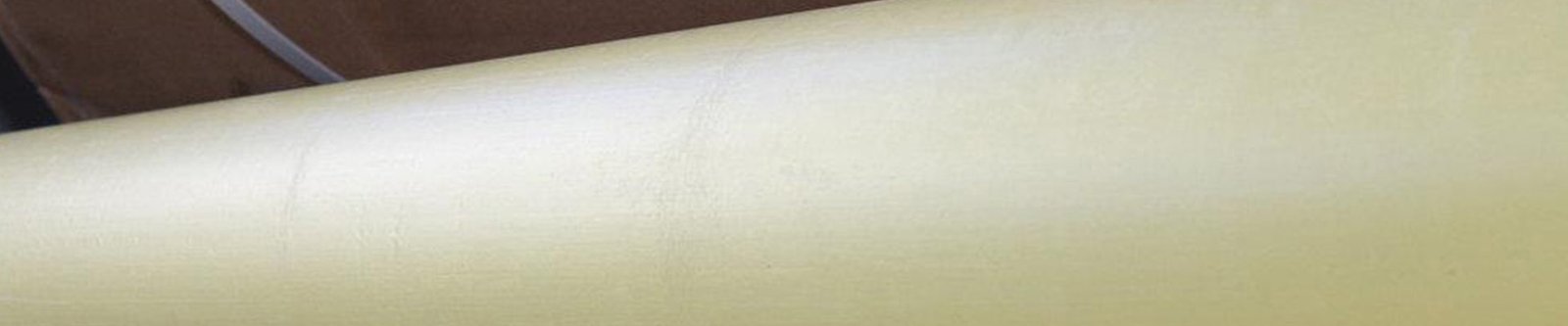
Modulus Breakthrough at 100 GPa: How New Carbon/Polyethylene Hybrid Materials Are Setting a New Benchmark for NIJ Level IV Hard Armor Plates
When armor designers talk about stopping a .30-06 M2 AP round — the defining threat for NIJ Level IV certification — two engineering realities come into direct conflict: the need for extreme rigidity to defeat armor-piercing projectiles and the operational imperative to keep plate weight within practical limits. For decades, ceramic composites backed by UHMWPE panels represented the industry's best answer. Today, however, a fundamentally different approach is gaining traction: carbon fiber / UHMWPE hybrid unidirectional (UD) fabric that pushes composite system modulus past the 100 GPa threshold. The result is a new class of hard armor plate that excels on both fronts — and then some.
Why Modulus Matters More Than You Think
Tensile strength captures most of the attention in ballistic material datasheets, but modulus — a fiber's resistance to elastic deformation — is equally decisive in hard armor performance. Here is why:
• Back-Face Deformation (BFD) Control: NIJ 0101.06 caps allowable BFD at 44 mm. A higher-modulus backing layer resists dynamic deflection when the strike face shatters, keeping the plate's rear surface from transmitting lethal blunt trauma to the wearer.
• Multi-Hit Structural Integrity: Each successive impact tests the plate's residual stiffness. A stiffer composite matrix maintains geometry after first-round delamination events, preserving protective area for follow-on shots.
• Energy Redistribution Efficiency: A high-modulus in-plane structure spreads the projectile's kinetic energy over a larger fiber volume faster, reducing localized penetration pressure.
• Shear Resistance in the Thickness Direction: Pure UHMWPE composites, while outstanding in tensile properties, exhibit relatively low through-thickness shear strength. Carbon fiber reinforcement bridges this gap decisively.
Standard ballistic-grade UHMWPE UD composites typically exhibit in-plane tensile moduli in the 80–95 GPa range. Pushing that figure above 100 GPa requires a precisely engineered hybrid architecture — one that harnesses carbon fiber's exceptional stiffness without sacrificing UHMWPE's unmatched toughness and energy absorption.
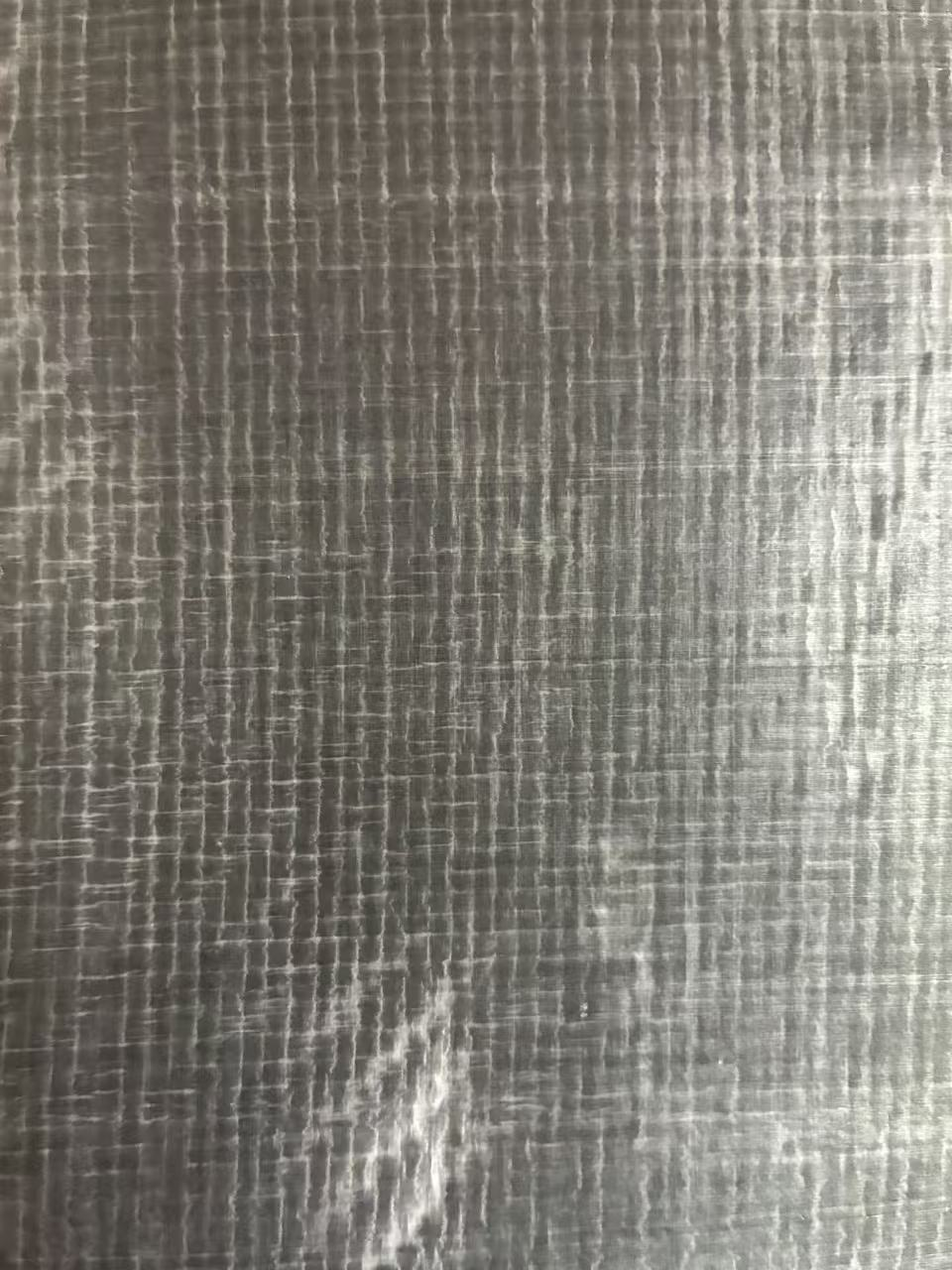
The Science Behind Carbon / UHMWPE Hybrid UD Architecture
In a hybrid UD construction, carbon fiber tows and UHMWPE fiber tapes are arranged in discrete unidirectional plies cross-plied at 0°/90° orientations and consolidated under precisely controlled temperature and pressure. The result is a laminate that draws on the complementary mechanical profiles of both fiber families:
• Carbon fiber contributes tensile modulus (typically 230–300 GPa at the fiber level), compressive strength, and crucially, interlaminar shear resistance — the property most needed to control BFD.
• UHMWPE contributes extraordinary specific tensile strength (up to 4.0 GPa), outstanding impact energy absorption, and low areal density — keeping total plate weight competitive with all-PE solutions.
• The matrix resin — a specialized thermoplastic or thermoset formulation — must bond intimately with both fiber surfaces, a non-trivial adhesion challenge given UHMWPE's inherently inert surface chemistry. Surface plasma treatment and optimized resin selection are key enabling technologies.
Published research in leading composites journals confirms that UHMWPE/carbon fiber (CFRP) hybrid plates achieve the lowest back-face deformation among hybrid configurations tested against 7.62 mm FMJ projectiles — outperforming both neat UHMWPE and UHMWPE/aramid hybrid plates at equivalent areal density. Inner-laminar hybridization, where carbon and UHMWPE fibers are interleaved within individual plies rather than stacked in discrete layers, yields the best combination of impact strength (recorded as high as 423 kJ/m² at optimal hybridization ratios) and in-plane modulus.
Meeting the NIJ Level IV Threat: What 100+ GPa Means in Practice
NIJ Level IV is the highest protection classification established by the U.S. National Institute of Justice. Certification demands that an armor plate reliably stop the .30-06 M2 AP round — a steel-core, armor-piercing projectile traveling at approximately 878 m/s — while keeping BFD within 44 mm across all impact points. Meeting this benchmark with a standalone composite plate (i.e., without a ceramic strike face) has historically been extremely challenging. The 100+ GPa hybrid UD system changes the calculus in several key ways:
• Projectile Deceleration Zone: Carbon fiber layers at the strike side provide a high-modulus deceleration zone that blunts and fragments the AP core before it penetrates into the energy-absorbing UHMWPE backing.
• Weight Advantage Over Ceramic Solutions: Traditional ceramic/PE Level IV plates can weigh 7–8+ lbs per plate. Advanced hybrid UD composite solutions are closing in on the 5–6 lb range for SAPI-cut (25 × 30 cm) plates, a meaningful tactical advantage over extended operations.
• Eliminating Spall Hazard: Unlike ceramic-fronted plates, which can produce secondary fragmentation upon impact, an all-composite hybrid UD plate contains the projectile without spall, reducing risk of secondary injury to adjacent personnel.
• Environmental Durability: UHMWPE-dominant composites resist moisture, UV radiation, and chemical exposure — addressing a recognized longevity concern under 2026 NIJ standard updates that place greater emphasis on armor lifespan and environmental conditioning testing.
Manufacturing Precision: The Key to Consistent 100 GPa Performance
Achieving a reproducible composite modulus above 100 GPa is not merely a matter of fiber selection — it demands millimeter-level manufacturing precision across every stage of UD fabric production:
• Fiber Alignment Tolerance: Misalignment of even 2–3° in unidirectional plies can reduce effective laminate modulus by 10–15%. Continuous tension monitoring and precision spreading equipment are non-negotiable.
• Resin Content Control: Optimal matrix volume fraction (typically 16–22% by weight for ballistic UD systems) must be maintained within ±1% to avoid either fiber-starved delamination or excess brittleness.
• Press Consolidation Parameters: Temperature, pressure, and dwell time during hot-press consolidation directly determine void content. Void fractions above 2% degrade both ballistic performance and interlaminar shear strength.
• Roll-to-Roll Quality Verification: Areal weight, thickness uniformity, and peel strength must be verified at defined intervals across every production roll to ensure end-plate consistency from edge to edge.
This degree of process control represents a significant entry barrier — and a meaningful quality differentiator for manufacturers who have mastered it at industrial scale.
Market Implications: A New Performance Benchmark for Defense and Law Enforcement Procurement
The emergence of 100+ GPa hybrid UD systems is shifting procurement conversations in defense and law enforcement markets in three concrete ways:
• Platform-Level Weight Budgets: Infantry modernization programs globally are targeting significant reductions in dismounted soldier load. A hybrid UD Level IV plate that saves even 1–1.5 lbs per plate translates to 2–3 lbs per soldier — without any sacrifice in protection classification.
• Total Cost of Ownership: Composite plates exhibit longer service lives than ceramic-backed alternatives when properly stored, reducing long-term replacement and logistics costs — an increasingly prominent consideration in large-fleet procurement.
• Supply Chain Diversification: As defense agencies seek to broaden their qualified supplier base beyond incumbent Western fiber manufacturers, high-quality hybrid UD fabric from established Asian producers — particularly those with ISO 9001 and military QMS certifications — is receiving serious evaluation.
Ready to Engineer Your Next-Generation Level IV Plate? Partner with Nantong Yankaian.
At Nantong Yankaian New Materials, we engineer hybrid-structure UD fabrics that are purpose-built for the demands of contemporary Level IV armor development. Our carbon/UHMWPE hybrid UD product line combines high-modulus carbon fiber reinforcement with premium UHMWPE fiber in a precisely consolidated 0°/90° architecture, delivering system-level modulus performance that empowers plate manufacturers to meet and exceed NIJ 0101.06 Level IV requirements. Each production roll is manufactured under rigorous process controls — covering fiber alignment, resin content, consolidation parameters, and areal weight uniformity — and backed by full traceability documentation. Whether you are scaling an established product line or qualifying a new composite plate design, Yankaian's technical team provides material specification support, sample runs, and customized laminate configurations. Visit yankaiarmor.com to explore our hybrid UD fabric portfolio and request a technical data package today.